

Selling the flat and buying the condo are two transactions. Their dates need to work as one household plan.
A five-to-six-month move is a useful starting scenario, not a guaranteed duration. Marketing can take longer, HDB acceptance comes before the processing period, and proceeds may arrive in different places at different times.
Homes for Thought · planning illustration
Two homes. One coordinated plan.
Month 1
Prepare
- Your flat
- Register Intent to Sell; prepare the flat and proceeds budget.
- Your condo
- Get a bank assessment; check usable CPF and shortlist homes.
Months 2–3
Find a buyer
- Your flat
- Negotiate, grant OTP and wait for the buyer to exercise.
- Your condo
- View homes; protect yourself from a premature purchase commitment.
Months 3–5+
Contracts and processing
- Your flat
- Submit both resale portions; await acceptance, approval and completion.
- Your condo
- Confirm sale-date treatment, funding and the replacement contract.
Months 5–6+
Funds, keys and move
- Your flat
- Complete; track cash and CPF credit; use an approved stay if arranged.
- Your condo
- Complete with funds ready; allow for works before moving.
1. Month 1: prepare before the viewings
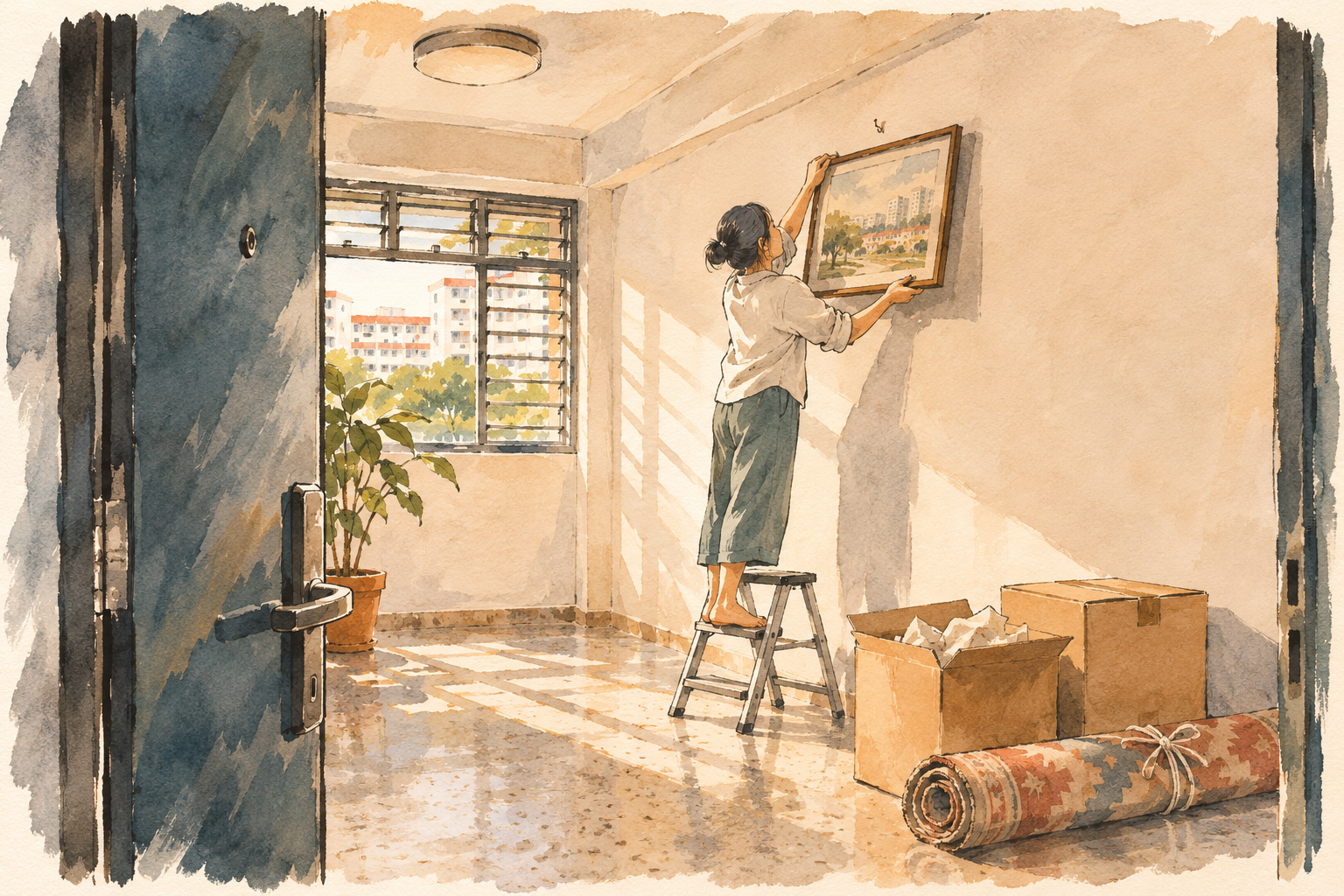
Register an Intent to Sell through HDB’s My Flat Dashboard and check the earliest date you may grant an OTP. HDB requires at least seven days after registration. Verify eligibility to sell before arranging the replacement purchase.
In parallel, obtain the bank’s assessment for the condominium loan. Read its conditions and validity. Check the current loan redemption amount and every owner’s required CPF refund; these determine the budget together with savings already available.
Keep three columns: cash available now, eligible CPF now, and proceeds expected after the sale. The future sale price cannot pay a deposit today. See how sale proceeds are calculated.
Homes for Thought · process explained
Use the right clock for each step.
Minimum interval after Intent to Sell before granting the HDB OTP.
HDB buyer’s option period, including weekends and public holidays.
Processing starts at application acceptance, not at listing.
Temporary stay after completion, if agreed and approved.
2. Months 2 to 5: the flat sale
Agree the resale price and grant the prescribed HDB OTP. The buyer has 21 calendar days to exercise; during that period, you cannot grant another OTP for the same flat. The option and exercise fees together cannot exceed $5,000.
After the buyer exercises, both parties submit their portions of the resale application within the contractual timeframe. The submissions must be no more than seven calendar days apart. The exercised OTP is important, but it is not HDB approval or completion.
HDB’s process guidance states that an in-order application is accepted within 28 working days. The eight-week processing period starts from acceptance. Documents still need endorsement, payments must be made, and eligibility must be maintained. Use the completion date HDB actually confirms.
“Eight weeks” does not include all the time spent finding a buyer and assembling the application.
For stamp-duty planning, IRAS generally treats acceptance of the OTP by the buyer as the disposal date where applicable. Have the lawyer confirm the order before exercising the replacement purchase. If the sale is later cancelled or rejected, get fresh legal and tax advice rather than assuming the original treatment still holds.
3. Months 3 to 6: the condo purchase
You can shortlist and view early. For this sell-first route, exercise the condo purchase only after the lawyer has confirmed the flat’s binding sale and its effect on the ABSD assessment.
Completed private-resale transactions commonly use a 1% option payment followed by a further 4% on exercise. The actual OTP determines the deposit, option period and completion date: these are contractual arrangements, not one statutory timetable for every resale. Avoid an expiring condo option while the flat buyer can still walk away.
At an illustrative $1.8m price, 1% is $18,000 and another 4% is $72,000. Together they are $90,000, forming part of the purchase price and downpayment. They are not additional to a 25% downpayment.
For documents executed in Singapore, the normal stamp-duty deadline is within 14 days after signing. Documents signed overseas have a different deadline. Electronic communications can also affect execution; have the lawyer identify the instrument and date. IRAS stamping guidance.
Negotiate completion around approved financing and the money that will actually be available. Renovation, checks and furniture delivery may add a further period before the new home is ready to live in.
4. Close the housing and funding gaps

An extension of stay can help with the housing gap. HDB’s terms cap it at three months after completion, with no further extension. It requires the buyer’s agreement and HDB approval. The seller must have committed to a completed property in Singapore ready for occupation; an unfinished new launch does not qualify.
The request accompanies the resale application, with evidence such as an exercised OTP or sale and purchase agreement. Discuss responsibilities, compensation and what happens if plans change before relying on the arrangement. Renting or family accommodation remains a fallback.
Homes for Thought · money explained
Completion is not the same as money ready to reuse.
Sale completes
Check the completion statement and payment arrangements.
Refund funds reach CPF Board
Transmission comes before processing. Confirm your transaction’s route.
Refund is credited
Normal processing is 3–15 working days after funds and details are received.
Eligible OA can fund the purchase
It must be credited and approved for the next payment.
CPF Board counts processing after receiving the refund funds and required details. Completion, transmission and credit are separate steps. Confirm the actual route and expected credit with HDB or your lawyer before fixing a purchase dependent on the refund.
Ask the banker about a bridging facility if there is a genuine gap. Its approval, amount, interest, fees and repayment date need confirmation. A possible bridging loan is not available deposit money until approved and ready to draw.
HDB’s Enhanced Contra Facility is for a sale and purchase involving resale HDB flats. It does not create an HDB-to-condominium contra arrangement. Reconcile the two payment schedules separately.
- Write down the flat’s exercise, application, acceptance and completion dates.
- Record the condo’s option, exercise, stamp-duty and completion dates.
- Confirm when cash and eligible CPF will actually be available.
- Allow a fallback home and time for works or delays.
Share this article
Instagram, TikTok & more
For Instagram and TikTok
These apps need an image or video for a post. Save the illustration and copy the title and link, then create your post in the app. Use the app’s link options to point readers to the article.
On supported phones, “Share via apps” opens the device’s sharing options. Available apps depend on your device and the content they accept.
A little more to think about
Join our readers
Leave your email for new guides on buying, selling and finding your next home.
We’re collecting signups first. We’ll ask you to confirm your email before updates begin. How we use your email.
Sources and method
Research checked 13 November 2026. Adapted from Marbell’s supplied article with editorial additions. Author review is pending.
- HDB: Intent to Sell.
- HDB: OTP process.
- HDB: application, acceptance and processing.
- HDB: February 2026 extension-of-stay terms.
- IRAS: contractual purchase and disposal dates.
- IRAS: stamping deadline.
- CPF Board: refund transmission and processing times.
The calendar is a planning example, not a service guarantee. Private-resale deposits and completion terms must be checked in the actual contract. No real client’s dates or finances are used. Illustrations are AI-generated.
The editors are practising property agents. Our editorial standards.